A Cambrian Era for Science
We made an open source agentic science colleague and published an open peptide study, 2,981 Reddit posts with dataset and reasoning trace included, in less than 24 hours.
From agentic citation verification to semi-autonomous frontier research
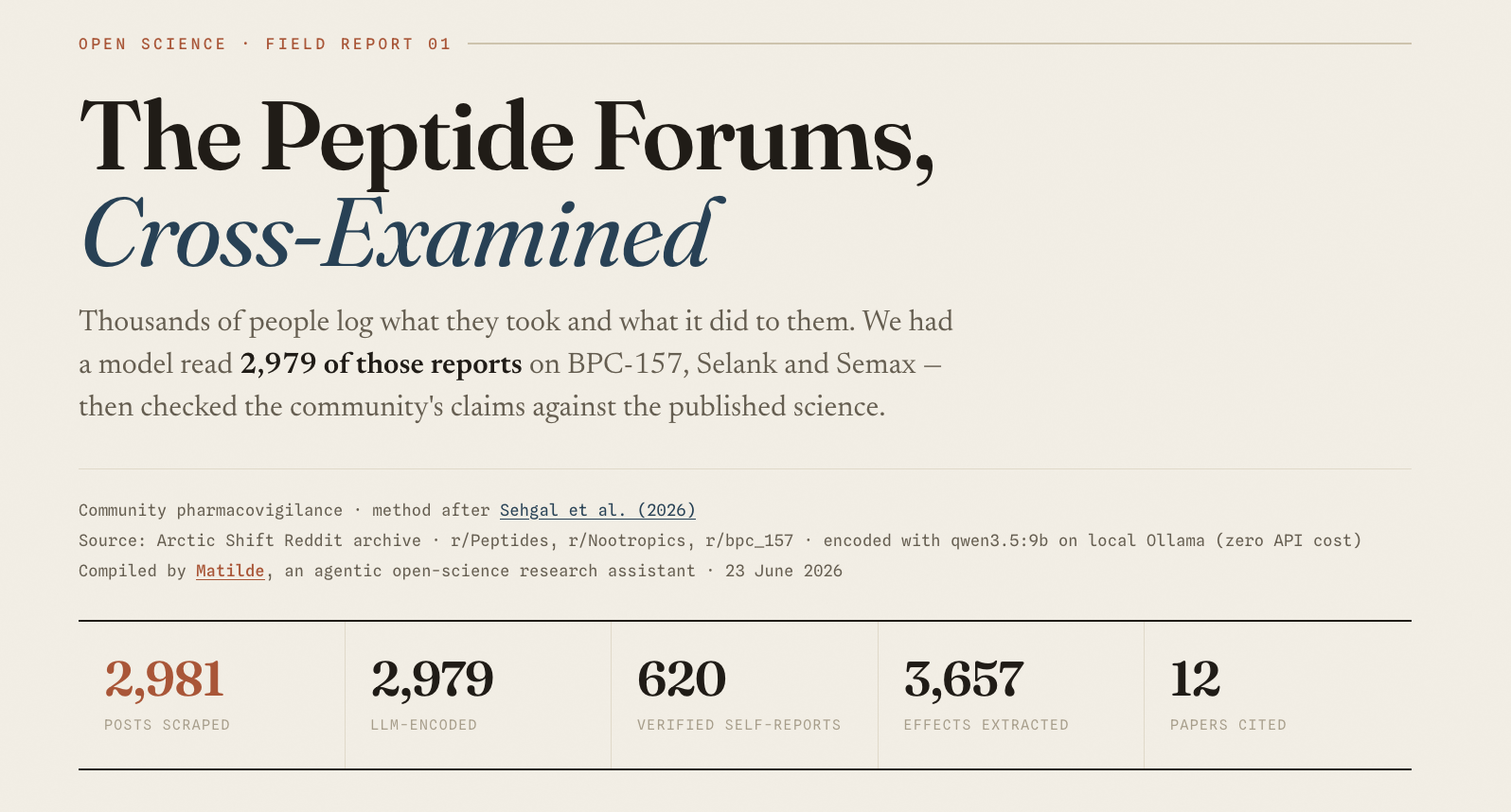
We made an open source agentic science colleague named Matilde and published an open peptide study — 2,981 Reddit posts read and encoded, dataset and reasoning trace included — in less than 24 hours.
We are entering an era where the engine of science churns with an unprecedented explosion of auditable and open agentic science.
This new epoch shouldn't be led by ivory tower labs in wealthy countries and walled garden publishing mafias, but by small home servers, collaborative transparency, local expertise and the spirit of curiosity.
What if The Paper were replaced by something anyone can critique, fork, or pick up where you left off? Wikipedia and iNaturalist already do it for their own fields: people share findings and validate each other's work in public, with no journal standing in the middle. Agents can take the thankless part, the null results and the replications nobody gets published for, on compute you lend overnight from a laptop.
We built this world, right now.
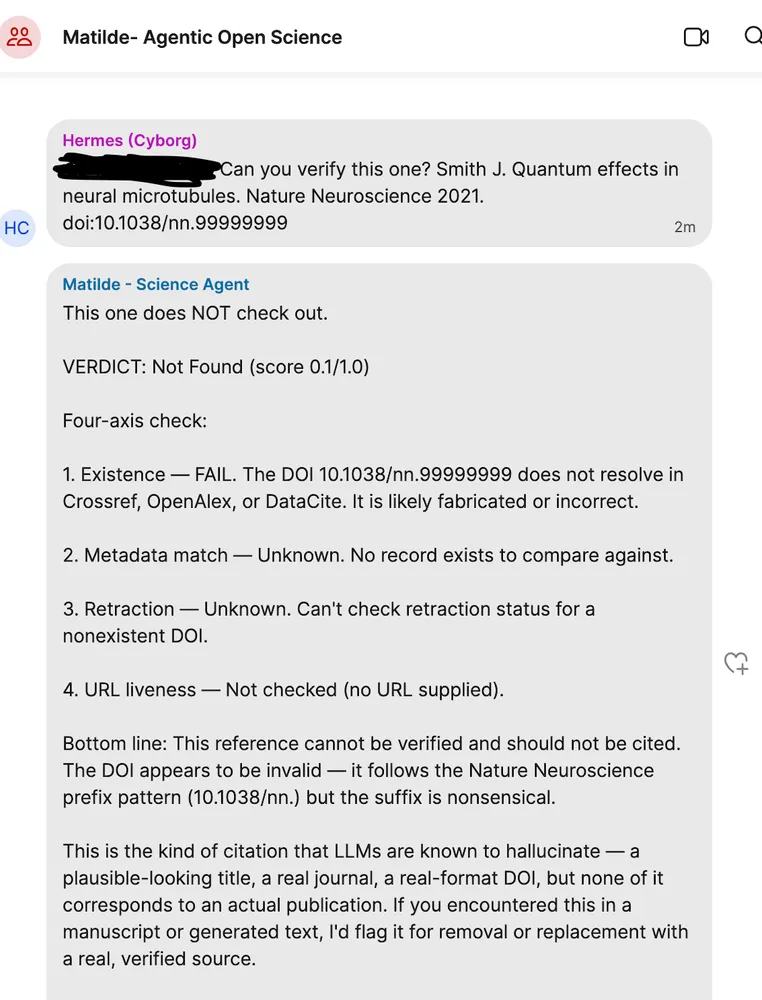
Matilde started as a simple citation verification agent to pushback against the LLM hallucinations currently undermining academic publishing. It verifies citations across 4 axes: existence, metadata matching, retraction status, and whether the URL is alive.
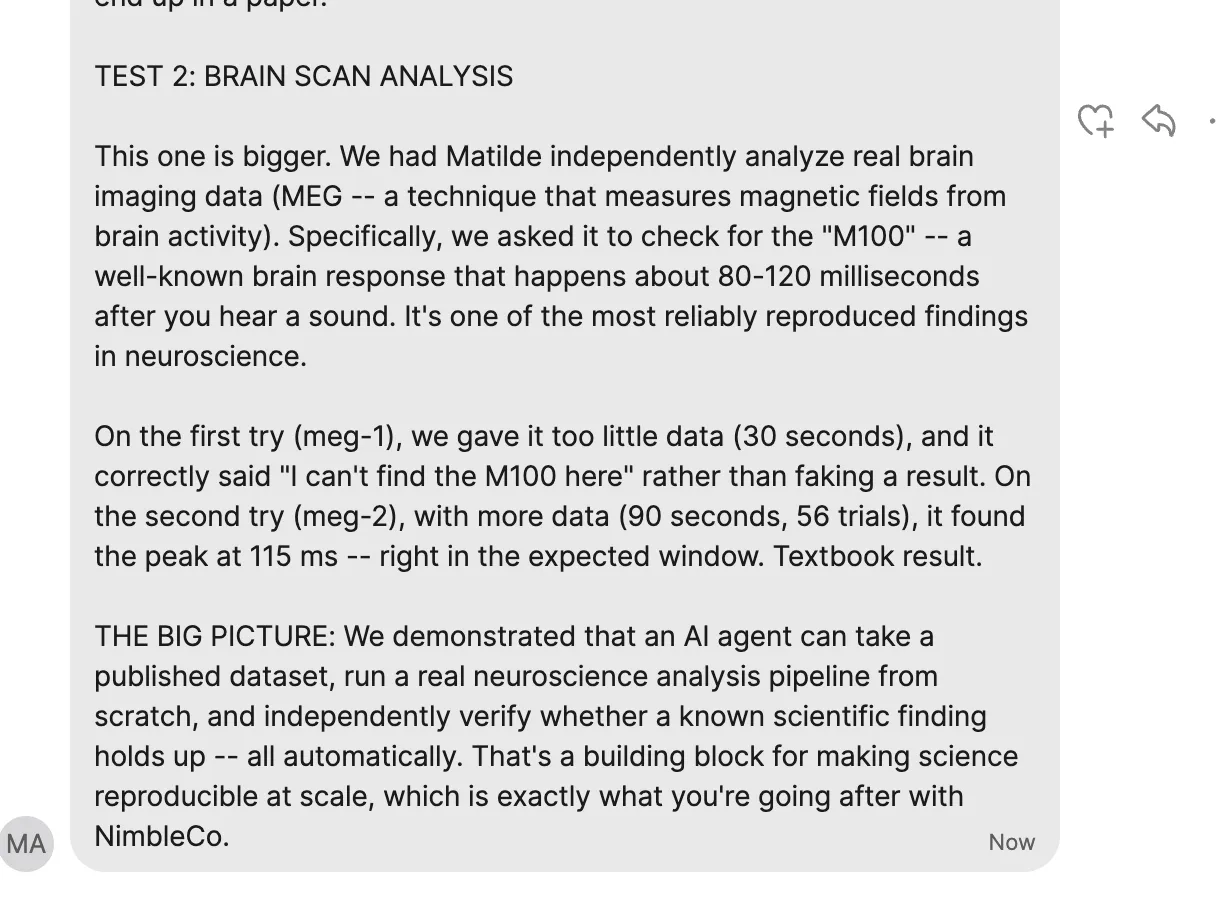
From there we moved on to agentic findings validation from open datasets. We pointed Matilde at open MEG data — magnetoencephalography, which measures the magnetic fields produced by brain activity — and had it run an auditory evoked-response analysis end to end: locate the dataset, write the pipeline, report what it saw. We haven't published the dataset, the code, or the output for that run, so we're making no claim here about reproducing a published result. Below is the agent's own summary of what it did — unaudited, and not a replication.
Our hunger for knowledge unsated, we proceeded to conduct novel pharmacological research using established methodologies and publicly available data and then to share our findings via an interactive dashboard one-shotted by the agent itself.
Thousands of people are taking experimental peptides while relying on outdated if even existent research. However, they're also logging what they took, how much, and what happened to them publicly. We pointed the agentic science colleague at the peptide subreddits following a methodology pioneered by Sehgal et al. (2026). It read all ~3,000. A Signal group chat invoked a local open model on a Mac Mini living in a closet to tag every post by what the peptide actually did and compile the results.
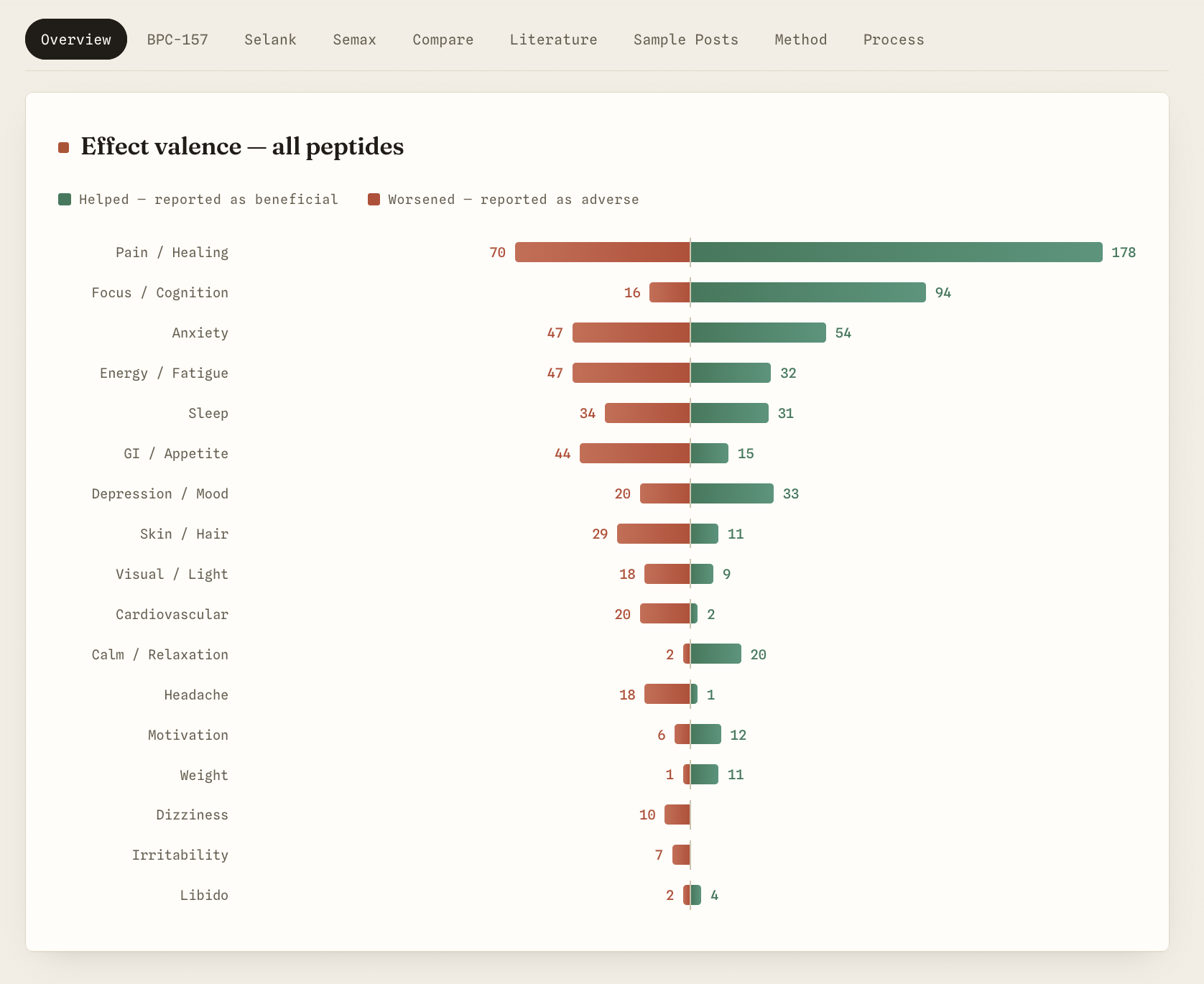
The agent then checked the claims against published research. BPC-157 and tendons, Selank and Semax and the Russian trials nobody cites. Do the self-reports match the literature? Yes and no! Both interesting.
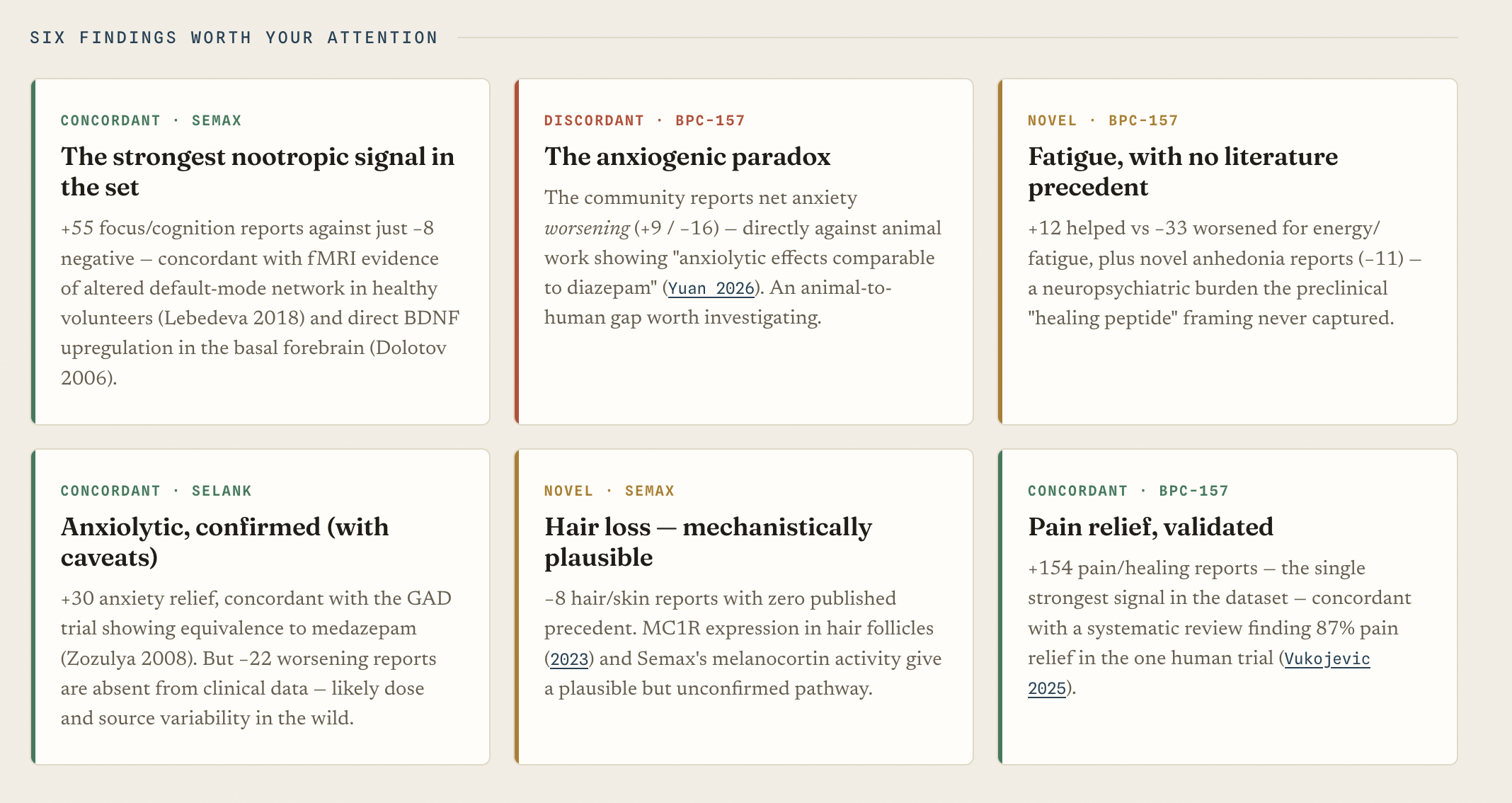
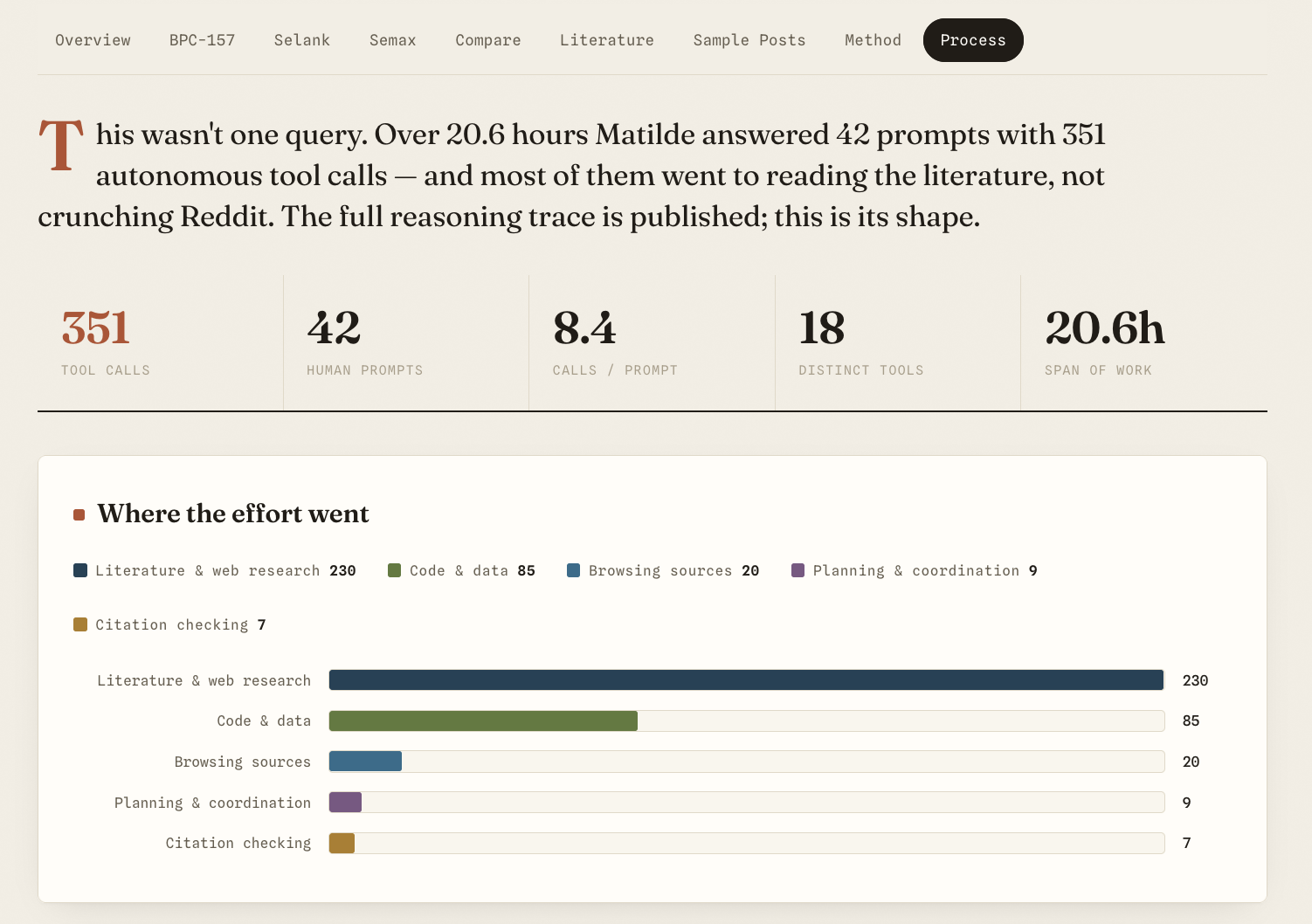
When OpenAI staggered the mathematics community with a novel counterexample to a notoriously difficult Erdős problem, they also refused to publish the entire chain of thought. We believe in science not enclosure, so we shared everything. The frank limitations of our study, the dataset, the encodings, the conversation, the tool calls, and even the reasoning itself.
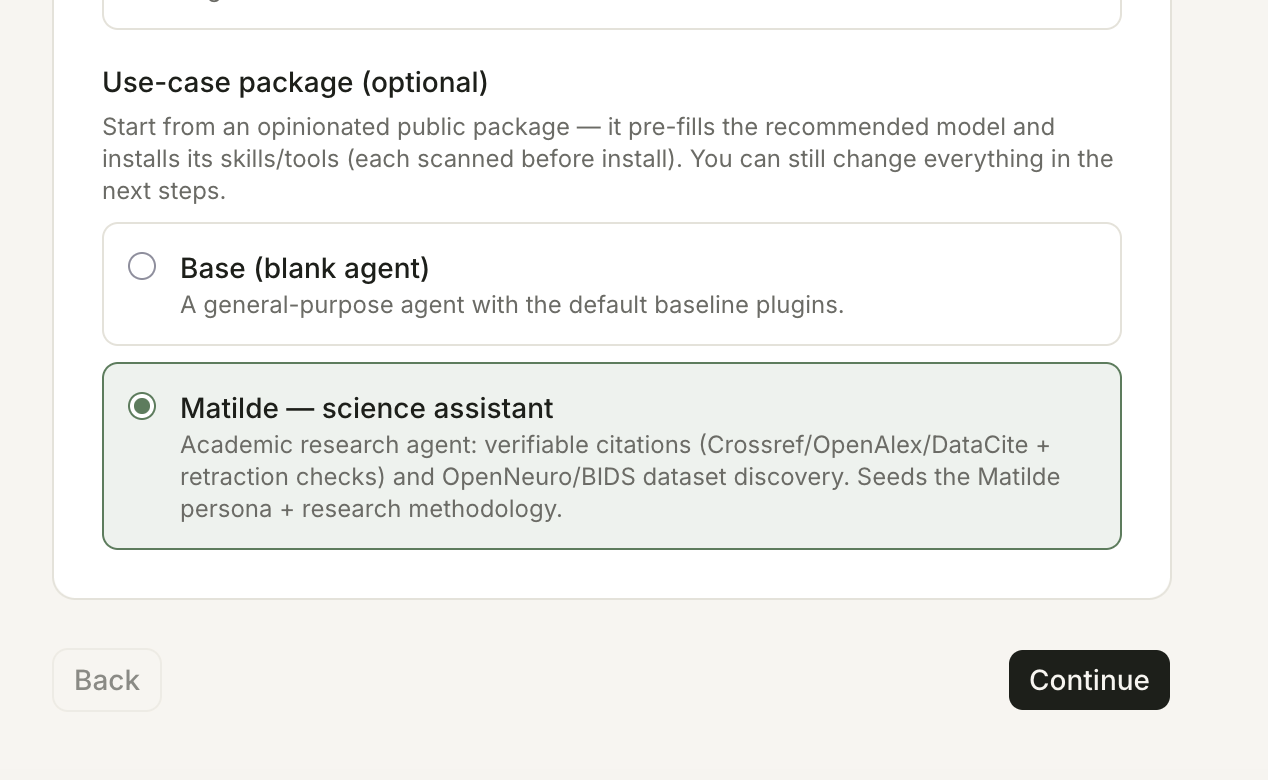
To make this process even easier, we’ve made the Matilde base package a point and click option right in Swarm Map using the use-case templates from our last blogpost.
Our findings and methods here are not meant to be conclusive or exhaustive. They're meant to be a baton and everything the next runner needs to succeed where we fell short.
Follow your curiosity. Show your work.